
In 2026, the environmental impact of land clearing vs forestry mulching is getting louder, and the pace of adoption is part of why. Demand is projected to grow from $1.1 billion in 2023 to $1.95 billion by 2031, signaling that more landowners are choosing mulching as a standard approach to vegetation management.
Key Takeaways
| What we focus on | Why it matters |
|---|---|
| Mulch stays on-site | We aim to protect soil and reduce erosion by leaving ground covered instead of hauling everything away. |
| Site conditions drive results | Slopes, soil type, and vegetation density decide how we control disturbance and manage runoff. |
| Selective work is possible | With proper planning, we can thin undergrowth and keep designated trees, supporting a healthier stand structure. |
| Equipment matters | We choose compact track and professional mulching setups that help minimize ground damage, especially on soft or tight sites. |
| We plan for 2026 realities | Landowners still expect clean edges, controlled traffic, and practical environmental safeguards in 2026. |
- Can forestry mulching be “low impact”? It can be, when we match the method to slope, soil, and vegetation goals. If you want a grounded checklist, see forestry mulching site conditions and what helps in 2026.
- Does mulching always improve erosion control? We design the mulch layer to protect soil. If you have runoff concerns, our approach emphasizes keeping soil covered and limiting disturbed areas.
- Is mulching better than traditional clearing? Often yes for environmental outcomes, because we typically reduce hauling and keep more protective cover on the ground. Compare approaches at forestry mulching vs traditional clearing.
- What affects cost and outcomes the most? Density, access, and ground conditions. For typical per-acre budgeting ranges, call us about our land clearing services in Catawba County

How Forestry Mulching Protects Land
Forestry Mulching leaves the soil and some critters better off than before. Forest management isn’t about a label like “eco-friendly.” We mean the real, on-site effects you can see and measure, including soil stability, runoff behavior, and how much ground disturbance the stump grinding creates.
Our perspective is simple. We use forestry mulching as a single-step land clearing method that grinds vegetation on-site and leaves mulch behind. That changes what happens to soil cover, wind exposure, and erosion risk compared to clearing methods that remove everything and leave bare ground.
At the same time, mulching is still machine work. If we ignore site conditions, the negative effects of compaction and messy results along drainage paths will cause you to work harder than you needed to for your land clearing project. That’s why our planning starts with the factors on your property, not with a one-size-fits-all process.
Soil Health and Erosion: The Biggest Environmental Impacts We Manage
Soil is where the forestry mulching environmental impacts show up first. When we mulch on-site, the goal is to leave a protective mulch layer that buffers raindrop impact and reduces surface wash.
We also pay close attention to how thick that mulch layer ends up. In many arboriculture settings, a mulch depth around 5 to 10 cm (2 to 4 inches) is commonly recommended to support improved soil conditions and water conservation without creating problems like excessive smothering.
On sloped ground or near drainage areas, the difference between “mulched” and “well-managed mulch” matters. We stage equipment access to limit track travel on sensitive soils, and we focus on leaving cover where you need it most.
- Where erosion starts: bare soil, disturbed banks, and concentrated flow paths.
- Where mulching helps: ground cover, improved infiltration, and reduced raindrop impact.
- Where mulching can hurt if planned poorly: heavy traffic on soft soils, uneven mulch buildup, and unmanaged runoff during and after the job.
If you want to see exactly how we think about soil and ground conditions, we recommend reviewing forestry mulching site conditions and what we need (and what helps) in 2026.
Biodiversity and Habitat: How We Reduce Harm While Clearing
Traditional land clearing leaves a larger footprint that disrupts large habitats as well as exposes the soil to negative treatments. Dense understory can shelter wildlife, but it can also hide hazard growth, reduce access, and increase unmanaged competition among plants.
Our approach is to match the clearing intensity to your goals. For many properties, that means controlled thinning, undergrowth reduction, and careful clearing around retained trees. We aim for a result that supports your land use while maintaining healthier stand structure where possible.
Mulching can also reduce the need for debris hauling. Less off-site handling can mean fewer disturbances around access routes and less time moving material. That can indirectly reduce the job’s overall footprint.
Air Quality, Smoke, and Waste: Mulching vs. Burning and Hauling
Mulching offers environmental benefits that burning and hauling may not. Burning creates smoke, odor, and carbon emissions, while hauling increases truck traffic and moves valuable organic matter away from the property.
During forestry mulching, we grind unwanted vegetation on-site and leave the resulting material as a protective ground layer. This creates reduced waste, supports soil health, and helps limit soil erosion while keeping the soil largely undisturbed.
As mulch decomposes, it can positively impact soil fertility and contribute to improved soil structure. This approach also creates minimal disruption to the surrounding environment, especially when native vegetation outside the work area is identified and protected.
We still plan around what “clean” means for your property, including finished edges, sight lines, and appropriate mulch placement. If hauling or separate debris handling is needed, we discuss it during the estimate.
If you’re comparing approaches, our guide to forestry mulching vs. traditional clearing explains the practical tradeoffs.
Water Runoff, Stream Buffers, and Slope Handling
Water is a major driver of forestry mulching environmental impacts because runoff connects your property to neighbors, culverts, and drainage features. If the job increases bare soil or channels flow, the environmental effects show up quickly after storms.
We address this by planning how the machine will travel and where the land clearing happens. On slopes, we reduce unnecessary turns and staging on soft ground. Near drainage areas, we move the work path so mulch supports infiltration to be environmentally friendly instead of piling into concentrated flow paths that produce unnecessary wildlife habitat disruption.
- Runoff risk factors: exposed soil, steep grades, and concentrated paths.
- Mitigation we use: controlled passes, mulch cover management, and access planning.
- Outcome we aim for: stable ground that holds up after the first major rains of 2026.
We also plan communication around your property’s intended use, whether it’s access prep, pasture reclamation, or right-of-way clearing. That is part of how we keep the forestry mulching environmental impacts aligned with your site priorities.

Job Planning That Reduces Disturbance: Access, Equipment, and Selective Work
Forestry mulching environmental impacts are not only about the mulch. They also depend on how we get the machine on-site and how we move through the work area.
In Catawba County and nearby areas, access constraints often become the hidden driver of compaction and ground disturbance. That’s why we assess access and intended use before we grind standing growth into mulch. We keep the scope focused on the usable space you want reclaimed, and we plan around “keep” trees where that makes sense.
If you want to understand how we evaluate vegetation density and how that affects what we can accomplish, we explain it in our local service pages and in our site condition guide.
- Vegetation mix: stem mix and tree size change how the mulch layer forms.
- Access and staging: determines how much ground gets tracked during the job.
- Soil stability: influences how mulch protects and how we limit disturbance.
- Selectivity: helps reduce harm when you want to maintain certain trees or understory patterns.

Common Risks That Affect Forestry Mulching Environmental Impacts (and How We Prevent Them)
Mulching can be a strong option, but we never pretend it removes all risk. The forestry mulching environmental impacts can worsen when jobs are done without the right plan or without attention to ground conditions.
Here are the common risks we watch for during every 2026 project, and the practical controls we use to keep outcomes stable:
- Ground compaction from poor access planning
We limit track travel on sensitive soils and design staging so the machine doesn’t unnecessarily cross soft areas. - Uneven mulch buildup near water flow paths
We manage mulch distribution so it supports soil protection instead of creating channels. - Over-clearing where selective work was the better choice
We plan around “keep” trees and undergrowth control when your goals require it. - Neglecting site-specific vegetation density
We match the method to what we see on-site, since density changes production, mulch formation, and disturbance levels.
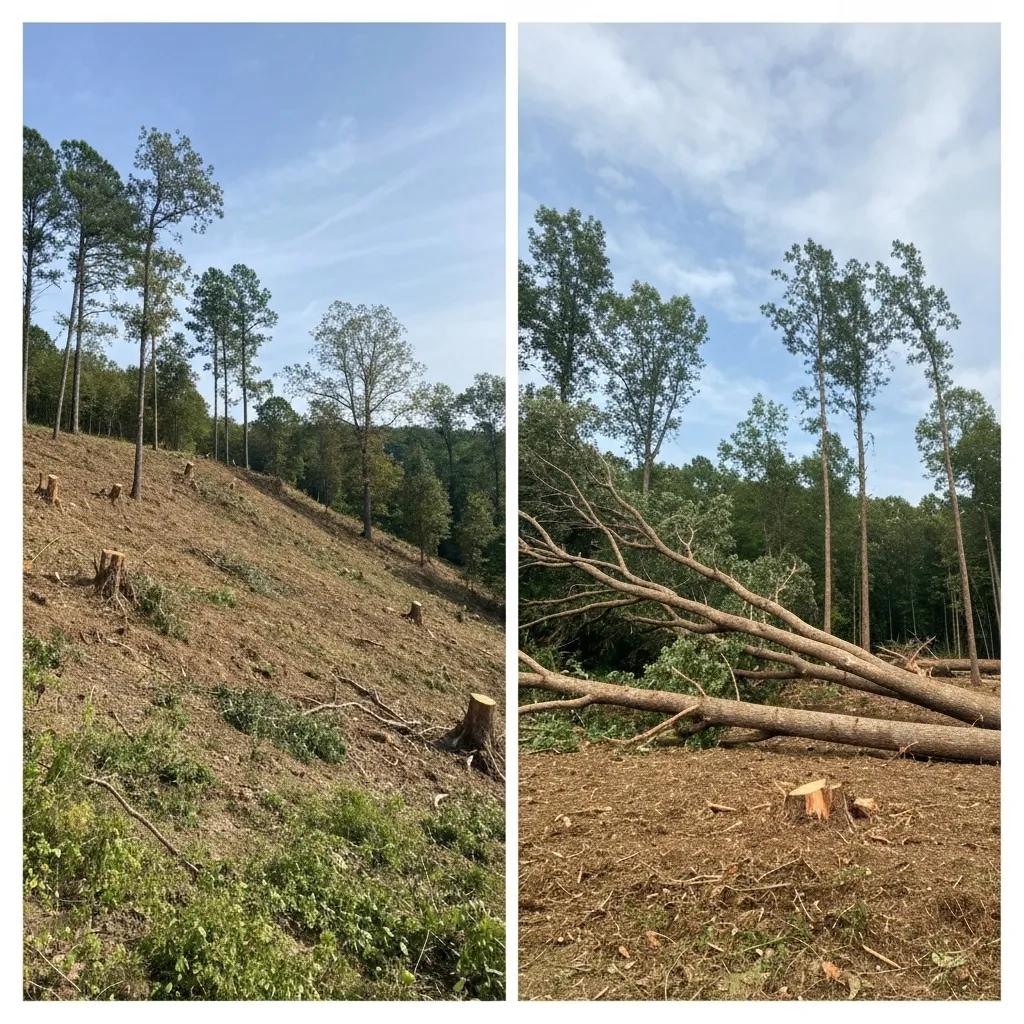
That percentage aligns with what we see in 2026: more properties want vegetation control that supports both safety and long-term site stability. .
2026 Cost Reality and Environmental Outcomes: What You Can Control
In many markets, people assume “low environmental impact” must mean “cheap.” That’s not how we work. Environmental outcomes depend on planning, equipment choice, and on-site execution.
For budgeting, we commonly see per-acre mulching pricing in a range of $1,500-$6,000, and job cost can swing based on density and access. That matters because the same job performed with inadequate access planning can increase disturbance, which indirectly worsens environmental impact.
We encourage readers to think of environmental outcomes as part of the project scope. Ask how the contractor plans to reduce runoff risk, how they stage equipment, and how they intend to manage mulch distribution.
For local examples and how we talk through the difference between mulching and mechanical removal, review land clearing services near you in Catawba County and explore our broader service setup at our services page.
The global market value is projected to grow from $1.1 billion in 2023 to $1.95 billion by 2031.
Conclusion: Choosing the Right Approach for Forestry Mulching Environmental Impacts
Lets break this down in practical, on-site outcomes. In 2026, we see that mulch-on-site planning can improve erosion resistance and reduce waste movement, but only when we match the job to soil, slope, and vegetation density.
When you hire experienced operators and focus on site conditions, selective clearing, and runoff control, forestry mulching becomes a strong option for reclaiming land with fewer negative side effects. Our goal is to help you get usable ground while keeping the environmental impacts controlled, predictable, and aligned with how you plan to use your property.
Frequently Asked Questions
What are the main soil microbial communities that impacts the soil?
The main environmental impacts on soil are related to erosion risk and surface stability. When we mulch on-site and manage ground disturbance, the mulch layer helps protect soil and reduce wash, especially after storms in 2026.
Does forestry mulching increase runoff or cause sediment problems?
Forestry mulching can affect runoff if the job increases bare soil or concentrates flow paths. In 2026, we prevent this by planning access, managing mulch distribution near drainage areas, and keeping soil covered to limit erosion.
Is forestry mulching better for the environment than bulldozing or clearing with hauling?
In many cases, environmental trouble-making is at a lower risk because mulch remains on-site and there is less material hauling. However, “better” depends on site conditions and execution, so we assess slope, soil type, and vegetation density before we start.
How deep should mulch be after forestry mulching to avoid problems?
A common guideline is around 5 to 10 cm (2 to 4 inches) for mulch depth in many arboriculture contexts. With forestry mulching environmental impacts in mind, we aim for a protective layer without piling mulch in ways that can create unnecessary smothering or uneven ground cover.
Can forestry mulching harm wildlife or damage habitat?
Habitat disturbance can be troubling if the land clearing is too aggressive or poorly timed. We reduce harm by matching clearing intensity to your goals, using selective work when appropriate, and focusing on undergrowth control rather than blanket removal.
What site conditions most affect the environmental negatively?
In 2026, slope, soil stability, access, and vegetation density are the biggest drivers conditions to focus on. These factors determine how well mulch protects the ground and how much disturbance occurs from machine staging and travel.
How much does forestry mulching cost per acre in 2026, and does that relate to environmental outcomes?
Typical per-acre mulching pricing can range from $1,500-$6,000, depending on density and access. While cost isn’t the same thing as environmental impact, careful planning and the ability to work efficiently often play a role in keeping disturbance controlled and mulch distribution effective.
