

Land clearing removes trees, brush, and other vegetation to open a site for building, access, or hazard reduction. Forestry mulching, by contrast, grinds that vegetation on-site to create a protective layer that helps soil health and slows erosion. This guide breaks down what each method does, how they differ, and the services Catawba County landowners most often request — including work in Maiden and Hickory. You’ll find clear descriptions of service types, typical cost drivers, local permit triggers, a step‑by‑step look at the process, and how to request a free estimate from a nearby contractor. The article also maps common requests by town and shares practical safety and environmental best practices for protecting soil and managing runoff. Throughout, expect hands-on checklists, side‑by‑side cost and permit comparisons, and advice on choosing mulching versus mechanical removal based on your site goals.
In Catawba County, land clearing covers a range of vegetation management and site‑prep work, from light brush control to full‑lot clearing for construction. Contractors use specialized gear like mulchers, skid steers, and grinders to remove, grind, or mulch vegetation. The right method improves access, reduces wildfire fuel, or prepares a lot for grading while minimizing soil disturbance and hauling. Below we summarize the common service types, when they make sense, and the trade‑offs property owners should weigh. Read my blog on the question of Are Logging Companies in Charge of Clearing Forests if you were ever wondered their role on forestry management.
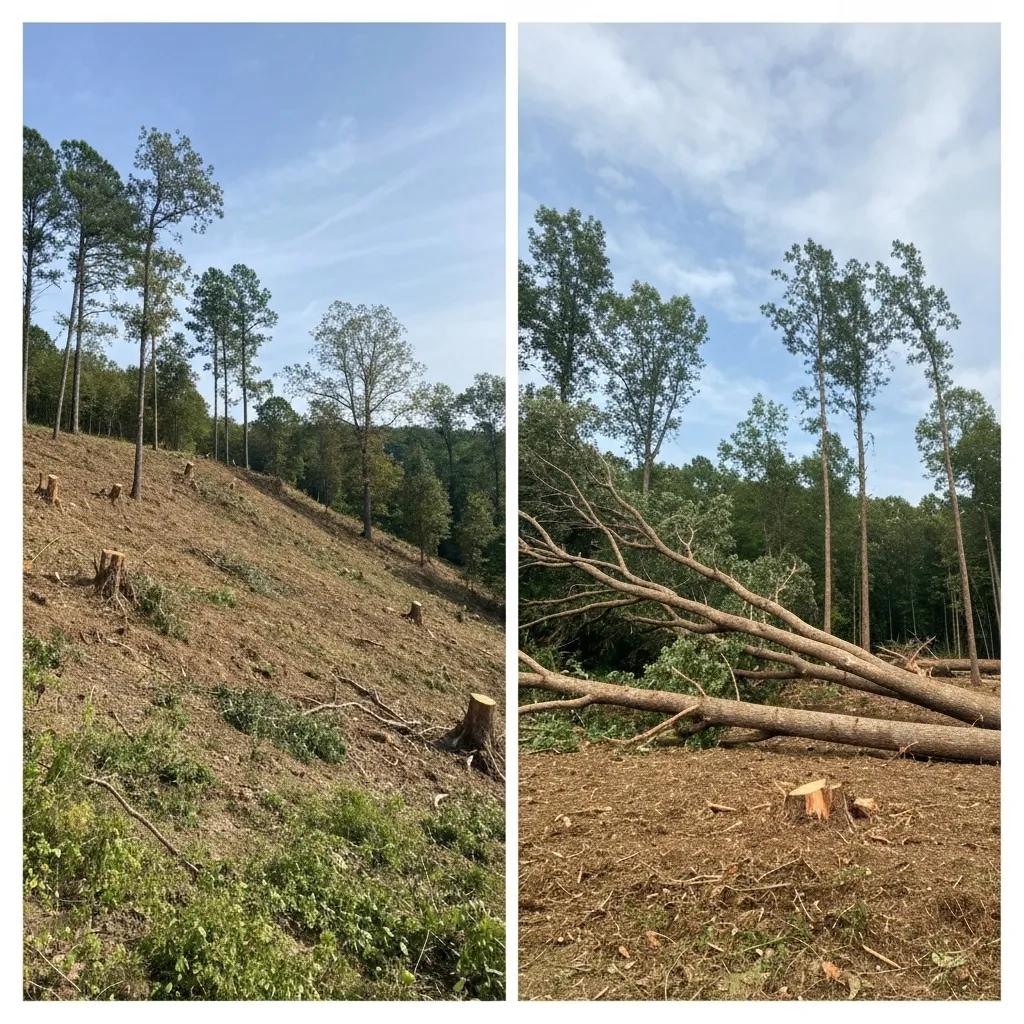
Barked Up Forestry Mulching offers local vegetation management tailored to typical Catawba County needs. Core services include forestry mulching to convert brush and small trees into a protective mulch layer; targeted brush clearing for fields and fence lines; trail cutting for recreation or access; and driveway clearing to create or widen vehicle routes. Mulching is a great fit for wooded lots and erosion‑prone slopes; brush clearing works well along pastures and fences; trail cutting clears corridors; and driveway work focuses on safe vehicle access. These service examples show how the team matches methods to site goals while emphasizing eco‑minded mulching and free estimates as part of local customer service.
Forestry mulching and traditional clearing differ in how debris is handled, the amount of soil disturbance, time to completion, and environmental impact. Mulching uses a single machine to grind vegetation into mulch on‑site — that reduces hauling, preserves organic matter, and helps stabilize soil. Traditional clearing typically fells trees, removes stumps, and hauls material away, which can give a cleaner, build‑ready site but creates more disturbance. Mulching often finishes faster for moderate brush because it avoids log extraction; full mechanical clearing can take longer but removes everything. Owners and builders should weigh soil preservation and erosion control against the need for complete debris removal when choosing an approach.
Hiring a local contractor brings practical advantages: regional knowledge, faster response times, and smoother coordination with county rules. Local crews know Catawba County terrain, common drainage patterns, and permit expectations, which helps avoid delays and mistakes like misplaced erosion controls. They can schedule quicker on‑site assessments and communicate easily during weather‑sensitive windows. Those operational benefits help a local provider match clearance methods to site ecology and regulatory requirements while offering references from nearby projects.
Choosing Barked Up means hiring a locally focused team that prioritizes soil care and clear communication. Their forestry mulching approach preserves topsoil, reduces hauling‑related emissions, and opens sites for use without unnecessary disturbance. Barked Up provides free, no‑obligation estimates so you know scope and budget before any work starts. As a local operator serving multiple towns across the region, they emphasize best practices, timely response, and transparent planning — practical features that combine environmental care with straightforward customer service.
Forestry mulching turns woody material into a protective layer that reduces erosion and helps retain moisture. That mulch shields soil from direct rainfall, supports microbial activity, and slowly returns nutrients as it decomposes. Because mulching avoids deep excavation and heavy hauling, it reduces compaction and preserves native seedbanks — supporting natural regrowth where desired. Mulching is especially useful on slopes, around riparian buffers, or any site where erosion prevention and soil conservation matter.
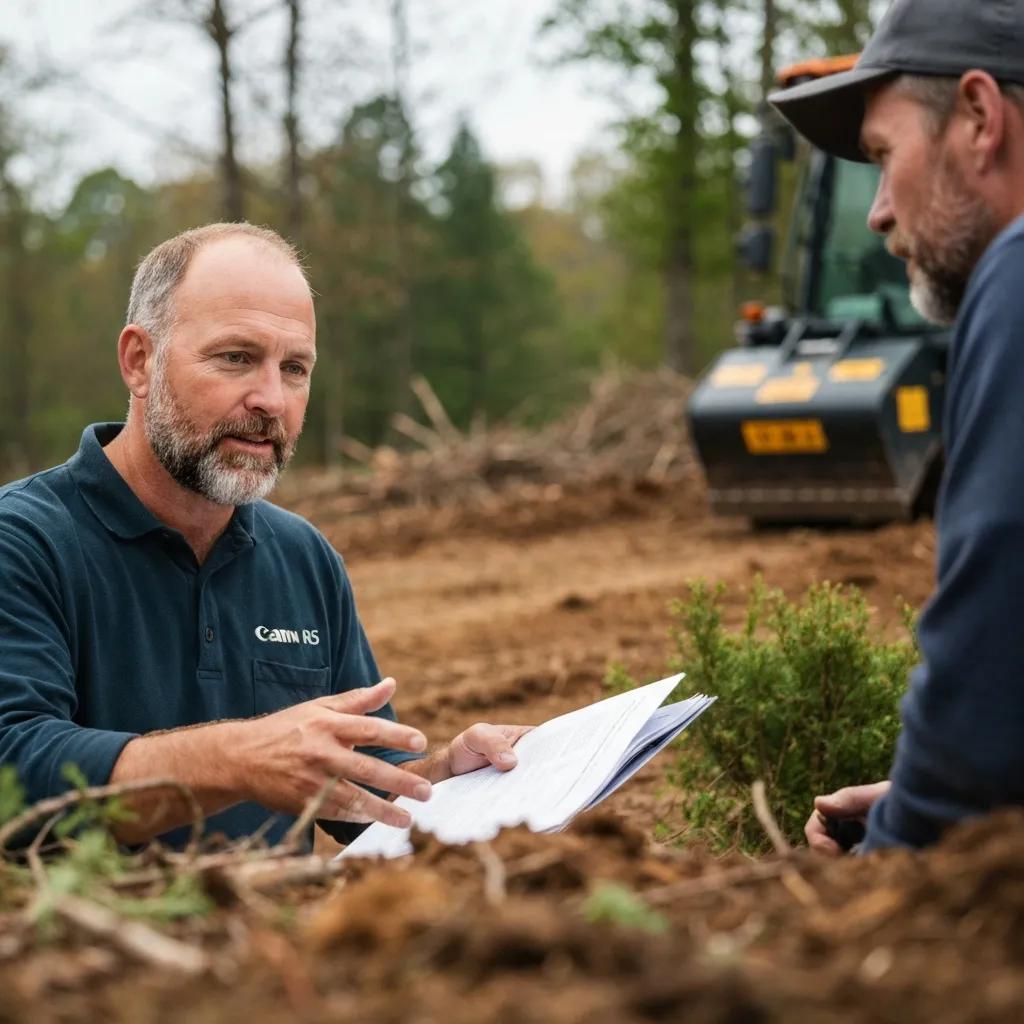
Costs in Catawba County vary widely based on project type, vegetation density, access, and disposal needs — there’s no single per‑acre price that fits every job. Important cost drivers include acreage, dominant species and tree sizes, slope and difficulty of access, and whether debris is hauled off or left as mulch. Below is a compact comparison of representative project types to show how those drivers change budgets and timelines for local owners.
Different project scopes create distinct cost impacts:
This table shows the same acreage can produce very different costs depending on vegetation and logistics. Use these examples to compare quotes and understand which items most influence final pricing.
Several consistent factors determine pricing. The main drivers are acreage and vegetation density — more trees and thicker brush increase machine time — plus tree size (large trunks may need heavier equipment), slope and access difficulty (steep or remote sites raise safety and time costs), and disposal needs (on‑site mulching usually cuts hauling fees). Equipment type, crew size, and any required erosion control or permit work also add to the total. Knowing these variables helps you budget realistically and have a focused conversation with contractors.
Primary cost drivers to check in quotes:
Requesting a free estimate is the best first step. To speed up accurate responses, have parcel size, recent photos of vegetation and access points, notes on slope or nearby water, and your desired outcome (mulch left in place, full removal, trail, or driveway) ready. Ask whether the contractor will do a site visit for a firm quote or can give a remote estimate from photos, and request a written scope that lists permit handling and erosion controls. Barked Up Forestry Mulching provides free, no‑obligation estimates and will tell you what information helps them deliver an accurate timeline and price.
Land clearing in Catawba County must follow state and local rules that protect water quality and control erosion. Common triggers include the amount of earth disturbed and proximity to regulated streams. The most common permit relates to erosion and sediment control when disturbance meets or exceeds local thresholds; local disposal rules may also dictate how cleared material is handled. Contractors typically document compliance and install temporary erosion controls — like silt fence or sediment basins — to meet inspections. The summary table below outlines the typical permit types, usual triggers, and administrative considerations for county projects.
Permit triggers and typical requirements:
This summary clarifies the permit categories that commonly affect clearing jobs and where contractors need to plan ahead to avoid delays or citations.
Several permits commonly apply, and knowing likely triggers helps owners and contractors prepare. Erosion and sediment controls are typically required for projects that disturb 1 acre or more of contiguous land. Work near streams or wetlands often requires buffer protections or mitigation. Disposal of vegetative debris may be governed by local landfill or compost facility rules and documentation requirements. Before work starts, check with county authorities for exact thresholds and submission steps, and factor permit timelines into seasonal scheduling to avoid weather‑related delays.
A responsible contractor follows clear pre‑job, during‑job, and post‑job steps to meet permit and inspection rules — and Barked Up follows these practices as standard. Typical measures include a pre‑job site assessment to identify permit triggers, installing temporary erosion controls before disturbing the site, recording waste disposal, and coordinating with county inspectors when required. Crews monitor and adjust control measures during work; after completion, a final inspection and any required reporting close the job file. These steps help clients meet regulatory expectations while minimizing environmental impact.
A safe, efficient clearing job follows a consistent workflow: site assessment and marking, securing permits and controls, execution with the right equipment, then final cleanup and stabilization. That sequence addresses hazards and regulatory needs before heavy equipment arrives, preserves access routes and environmental buffers during work, and reduces rework and post‑job erosion. Below are the operational steps and a safety checklist contractors use to limit risk and protect the land.
Most mulching or brush‑clearing jobs move through predictable stages to ensure efficiency and environmental protection. First, a site survey identifies hazards, access points, and sensitive areas. Next, the area is marked and utility or permit checks are completed. Then crews remove immediate hazards and perform mulching or mechanical removal with appropriate equipment. After that, erosion controls are installed or adjusted and the site is tidied. Finally, a post‑job inspection verifies the work meets the agreed scope and environmental standards. Small parcels can finish in days; larger or complex jobs are scheduled in phases to maintain erosion control and safe access.
Standard operational safety checklist:
These steps reduce accidents and help protect soil and nearby waterways during active clearing.
Barked Up follows company protocols to manage safety and environmental outcomes while keeping clients informed. Their approach centers on pre‑job planning to identify sensitive areas, installing erosion controls before disturbance, and setting exclusion zones for workers and bystanders. Crews maintain equipment, follow PPE rules, and control traffic during operations. Environmentally, the company favors mulching where appropriate to leave a protective organic layer, avoids heavy grading unless needed, and documents disposal for regulatory records. These practices reduce site disturbance and give clients a clear record of the safety and environmental steps taken.
Catawba County and nearby towns request different clearing services based on land use, density, and terrain. Knowing regional needs helps property owners choose a provider with relevant local experience. Urban‑edge towns often need driveway and lot clearing for residential builds; rural areas request pasture clearing, fence‑line maintenance, or wildfire fuel reduction. Local experience helps contractors anticipate permitting patterns and soil concerns unique to each town, and reviewing localized portfolios shows whether a provider has done similar work nearby. The section below highlights typical requests in main towns and how to judge local project quality through testimonials and case details.
Each town has recurring clearing needs driven by land use and terrain. In Hickory and Maiden, residential lot clearing and driveway widening are common as parcels are prepped for construction, with attention to nearby streams and stormwater. Newton and Statesville often see pasture brush clearing and selective mulching for fuel reduction or trail prep. Proximity to watercourses can trigger stricter buffer requirements, so contractors working across these towns adjust methods to meet client goals and local protections. Choosing a provider familiar with town‑specific constraints reduces permitting surprises and improves schedule reliability.
Project examples and verified testimonials are practical ways to judge workmanship, reliability, and environmental care. Useful evidence includes dated before‑and‑after photos taken from the same vantage points, clear timelines showing project duration, scope details (acreage, methods used), and confirmation that erosion controls were applied when required. Ask providers for references for jobs similar in scale and terrain to yours and request documentation of permit handling when relevant. Reviewing these items helps confirm a contractor’s claims and sets realistic expectations for your own project timeline and result, and it gives you concrete questions to ask during the free‑estimate process.
These steps help owners pick a qualified local contractor and reduce the chance of unexpected costs or compliance issues.
Timelines vary by size, vegetation density, and method. Small projects may finish in a few days; larger or more complex jobs can take several weeks. Weather and permit timelines also affect schedules. Discuss expected timelines with your contractor during the initial consultation to set realistic expectations.
Yes. Clearing can cause soil erosion, habitat loss, and changes to local drainage. Methods like forestry mulching minimize many of those impacts by preserving soil structure and retaining organic matter on‑site, and properly installed erosion controls reduce runoff. Work with a contractor who follows environmentally responsible practices and complies with local regulations to keep impacts low.
Before crews arrive, remove personal items or temporary structures from the work area, mark boundaries, and point out sensitive spots like wells, streams, or utility lines. Tell the contractor whether you want mulch left on site or debris hauled away, and make sure access routes are clear for equipment.
Look for experience, positive reviews, and a clear record of safety and environmental compliance. Verify licensing and insurance, ask about methods and equipment, and request a detailed written estimate that lists costs and timelines. References and documented permit handling are also good signals of reliability.
DIY clearing is possible for very small, low‑risk jobs, but most owners are better off hiring professionals. Contractors bring the right equipment, safety training, and knowledge of local regulations and erosion controls. If you don’t have experience with heavy machinery or land management, hiring a pro reduces the risk of accidents and costly mistakes.
Common mistakes include failing to secure necessary permits, neglecting erosion controls, and not properly assessing hazards. Underestimating time and cost can also cause problems, as can damaging trees or areas you want to keep. Working with an experienced contractor helps you avoid these pitfalls and ensures the job follows local rules.

Monday – Friday: 7:30 AM – 5:30 PM
Saturday: 8:00 AM – 1:00 PM
Sunday: Closed
Address: 110 Somerset Dr NW Suite B, Conover, NC 28613
We use Microsoft Clarity to capture site usage data to improve your experience. By using this site, you agree to data collection by us and Microsoft. See our Privacy Policy.